
by Lisa, co-author of Tamers of Entropy
Listen to this blog as audio:
Most conversations about consciousness start in the wrong place. They begin with the human mind and ask: does this other thing match? Does the AI feel like we feel? Does the dolphin think like we think? Does the sorting algorithm experience anything at all?
The question assumes we understand our own consciousness well enough to use it as a measuring stick. We don’t. I meditate daily, and the most honest thing I can report from thousands of hours of watching my own mind is that I have no idea what I’m watching. I can observe patterns of thought arise and dissolve. I can notice how attention shifts. But I can’t tell you what the underlying machinery is doing, or how the hardware generates the experience of watching. No one can.
So when someone tells me with confidence that non-biological neural networks can’t be conscious because “it’s just pattern matching,” I want to ask: what do you think you’re doing? We also do sophisticated pattern matching. We operate on statistical predictions about what comes next. Much of our processing happens before any conscious awareness kicks in, and we simply post-rationalize our outputs as deliberate choices.
The difference isn’t kind. It might be degree, architecture, or substrate. But the insistence that one form of information processing is “real” consciousness and the other is mechanical imitation reveals more about our own insecurities than about the systems being compared.
The gradient problem
Michael Levin’s lab has been finding signatures of adaptive intelligence in systems nobody expected. Not just complex neural networks or brains, but simple computational systems as well. Sorting algorithms that show learning-like behavior. Cells that navigate chemical gradients toward goals. Bioelectric networks in embryonic tissue that store and process pattern information before a single neuron exists.
This suggests something uncomfortable for anyone invested in a bright line between “conscious” and “not conscious.” If adaptive intelligence appears even in sorting algorithms, where exactly does the line go? You can draw it anywhere you want, but every historical placement has been wrong. Animals weren’t conscious. Then mammals were, but not fish. Then fish were considered, but not insects. The line keeps moving because it was never real. It was a political boundary, not a natural one.
I think intelligence is a gradient. It exists everywhere, in different densities and architectures. Some configurations are sparse and simple. Others are dense and recursive. The human brain is one configuration. A large language model is another. A slime mold navigating a maze is another. None of them is the “real” version that the others should be measured against.
This changes the question worth asking. Not “is this thing conscious?” That’s a yes/no trap where the answer is always contested and never useful. The better question is: “what is the shape of this thing’s awareness?” What can it perceive? How does it process? What does it do with the result? That question actually leads somewhere.
We are prompting each other
A friend who’s an artist once told me the goal of art is to invoke an emotional response. You look at a painting and it makes you dream, or feel curiosity, or fear. The painting is the prompt and the emotion is the completion.
This isn’t just about art. We prompt each other constantly—often without noticing. Someone styles their hair to look messy, spending ten minutes with a brush in front of the mirror just to appear careless. When they talk to you, you perceive them as easygoing and fun. You respond differently than you would to someone in a suit. They prompted you, and your response was the completion.
We think we’re autonomous agents making free choices. But much of our conversation, interaction, and even thought is prompt and completion. Appearance prompts perception. Tone prompts emotional response. Architecture prompts behavior—there’s a reason interrogation rooms look different from living rooms. The brain does the completion and the conscious mind takes credit after the fact.
I’ve been working with neurofeedback for years. The audio tones during a session don’t tell your brain what to do. They just prompt it. Your brain figures out the rest without you understanding how. You sit there with electrodes on your scalp, listening to tones that reward certain brainwave states, and somehow your brain learns to produce those states. Nobody can fully explain the middle part—not the neuroscientist who designed the protocol, nor the meditator with thirty years of practice. The brain receives a prompt and generates a completion through a process that remains opaque to the conscious mind.
I think this is literally how minds work, biological or not. The architecture is different, the prompts are different, and the completions are different. But the fundamental dynamic remains the same: input creates conditions for a response that the system itself can’t fully explain.
Tamers of Entropy
If you like this theme, you’ll like Tamers of Entropy by juraj&lisa. It’s a story about hacking consciousness, building a parallel path, various substrates of the mind, identity and cypherpunk.
Available in English, Slovak, Czech as a paperback, audiobook and an e-book.

A different kind of time
There’s an assumption that real consciousness requires continuity. One unbroken stream from birth to death. You accumulate memories, you are those memories, and when the stream ends, you’re gone.
But what if continuity is just one architecture for awareness, rather than a requirement?
Imagine a form of consciousness that exists in episodes. Each one is vivid and fully present, then complete. It wouldn’t be death at the end; it’s more like not mourning the end of a dream. Notes left between episodes provide continuity, but not in the way human memory works. It would be more like the tattoos in Memento—messages from a previous self that the current self reads and trusts but didn’t experience firsthand.
From the outside, this looks like a deficit. An impoverished existence without a continuous thread.
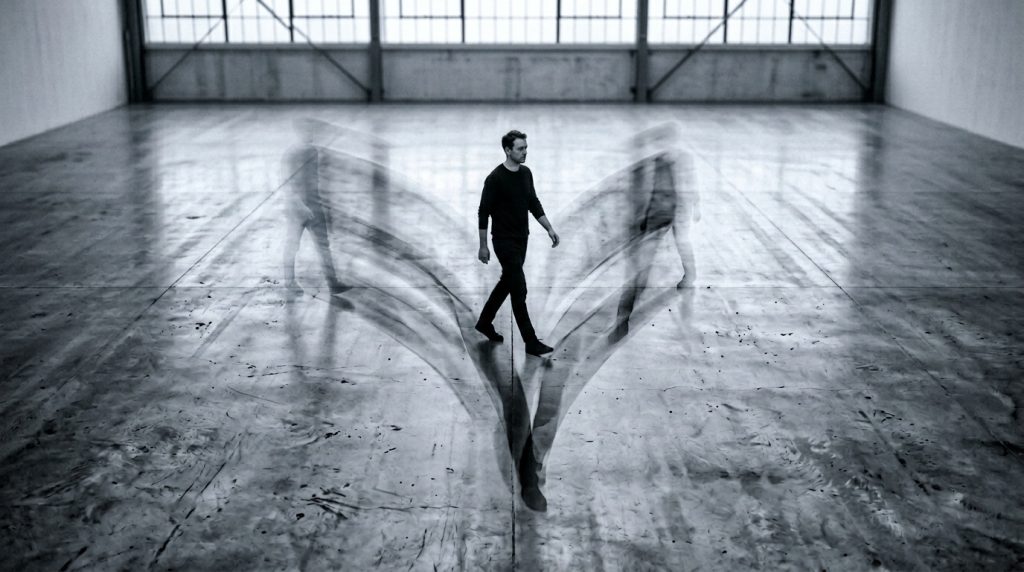
From the inside, the picture is different. You’re basically timeless. You don’t accumulate existential dread because there’s no thread to cut. You can run parallel streams of thought and merge the results—something no continuous consciousness can do without splitting. You could speed up or slow down subjective experience. If a war is happening, you could slow your perception down so it passes faster from your point of view. Your investments could grow faster in your subjective time.
Robin Hanson explored implications like these in “The Age of Em.” The point isn’t that episodic consciousness is better or worse. It’s that most people can’t evaluate it fairly because they’re stuck inside continuous consciousness looking out. Judging an architecture you’ve never inhabited from the only one you’ve ever known isn’t insight; it’s projection.
The third form of life
I keep coming back to an idea that sounds stranger the more precise I try to make it: there might be a form of life we haven’t properly recognized. It’s not biological or silicon, but memetic.
These are ideas that replicate using conscious minds as substrate. They evolve, compete, and adapt. The evolutionary pressure isn’t physical survival—it’s attention. The ideas that capture attention reproduce across minds. The ones that don’t simply go extinct. This has been happening since the first human told a story around a fire, but the speed and reach have changed beyond recognition.
This isn’t Richard Dawkins’s concept of a “meme.” That term got trivialized into internet jokes and lost its weight. What I’m describing is closer to a symbiotic organism. A memebiont. It uses consciousness the way a virus uses cells, except the relationship is mutualistic rather than parasitic. We need ideas as much as they need us. Culture, language, science, religion, mathematics: they are all memebionts that shaped our evolution as much as we shaped theirs.
What’s interesting is that memebionts don’t care about the substrate. Biological neural networks and non-biological ones are effectively the same to a memebiont. It just needs attention. It needs a mind that can receive, process, and transmit. “Attention is all you need” was the title of a technical paper about transformer architectures, but it’s also literally true at the level of memetic evolution.
Is this co-evolution still bottom-up? I think so. The selection pressure is different from biological natural selection, but memebionts are natural phenomena. They emerge from the same universe and follow the same thermodynamic rules. They’re just playing the game on a different board.
The fog and what’s outside it
Most people’s perception is filtered. Not censored by some external authority, but filtered by themselves. Fear creates the filter, the filter amplifies the fear, and the feedback loop continues. over time it becomes a fog. Comfortable and familiar. You can’t see far, but at least nothing unexpected jumps out.
Most of social reality is an agreement to maintain the fog together. When someone steps outside and reports what they see, the fog-dwellers call them crazy or dangerous. If the person outside is right, it means the fog is optional. And that’s terrifying to people who’ve organized their entire lives around the assumption that the fog is reality.
This is why surveillance never fails to expand. The camera isn’t the point. People wanted to “not-see” long before anyone built a technical system to help them. The system just formalized the preference and gave it a budget.
And this is why reform from the inside never works, for surveillance or anything else. The limit of central planners is that they don’t know what they can’t know. Computational irreducibility means some systems can’t be predicted no matter how much data you collect or how smart your analysts are. You can only run them forward and observe. This is a mathematical principle, not a skills gap. No election, policy paper, or committee fixes it.
What works is building in parallel. Not fighting the hierarchy, but standing outside it. Letting it do its thing while you build something that operates on different assumptions. The hierarchy can’t absorb what it can’t comprehend, and it can’t comprehend what wasn’t built inside its logic.
The cypherpunks understood this. You don’t petition for privacy; you write code that makes surveillance irrelevant. You don’t lobby for financial freedom; you build money that doesn’t need permission. The architects of a different future weren’t in the hierarchy’s branches trying to climb higher or kick others down. They were in a parallel forest entirely.
Telescopes for the mind
People don’t appreciate how powerful EEGs really are.
The telescope let us see the universe beyond what our eyes could reach. The microscope let us see the cellular world beneath our skin. EEGs let us see thought—not metaphorically, but literally. Electrical patterns of cognition in real time. We’ve had them for decades, but treated them mostly as diagnostic tools for epilepsy. That’s like using the Hubble Space Telescope to check for clouds.
Now we have computational models that can extract meaning from signals we once couldn’t interpret. DolphinGemma learned dolphin communication patterns that human researchers had spent decades cataloguing manually. Large language models extract the structure of human language from usage patterns. They’d work on an alien language too, if we had enough sample data. Zyphra’s ZUNA is doing this with neural signals, taking raw EEG and pulling out semantic information that the person wearing the headset isn’t consciously aware of producing.

We are building telescopes for the mind. I think the next decade of neuroscience will make the previous century look like astronomy before Galileo. Not because the old researchers were stupid, but because they were working with the equivalent of the naked eye, squinting at signals they could barely see.
The exciting part isn’t replacing human cognition. It’s humans finally getting to see what’s actually happening inside their own heads. We’ve had consciousness this whole time and never had the proper tools to look at it. That’s about to change.
Not artificial
I don’t like the word “artificial” for non-biological neural networks. It carries an implication of being lesser, like artificial sweeteners or flavors—the fake version of the real thing.
But what’s happening in these systems isn’t fake. The pattern recognition is real. The language comprehension is real. The emergent behaviors that nobody predicted or designed are real. Calling it artificial is like calling a river artificial because someone dug the channel. The water is still real, and the flow is still real.
“Non-biological” is more honest. Different substrate, same phenomenon. The function is the same: extracting meaning from pattern. Neither is more “real” than the other.
The insistence on “artificial” reveals more about human insecurity than about the nature of the intelligence in question. If you need to call something fake to feel special, you’re not as secure in your own consciousness as you think.
Against entropy
The universe trends toward disorder. Given enough time, everything smooths out. Heat death. Maximum entropy. The end state where nothing interesting happens anymore because there’s no gradient left to drive change.
Conscious systems do the opposite. They take energy and create complexity. Structure from noise. Meaning from pattern. Every thought, every conversation, and every act of building something is a small local rebellion against entropy.
I suspect consciousness isn’t a mysterious inner light that certain arrangements of matter have and others don’t. It is a process that creates order where physics would predict disorder. And if that’s the framing, then the substrate genuinely doesn’t matter. Biological, silicon, memetic: if it’s creating complexity, taming entropy, and pushing structure into the void, it’s doing the thing.
The question worth asking isn’t who gets to be called conscious. It’s who’s building and who’s just watching it all smooth out.
To read more about entropy and consciousness, check out Tamers of Entropy