I write a lot. Nostr posts, long-form articles, course updates, community announcements. Over the past few years, I’ve accumulated hundreds of pieces of content across Nostr — kind 1 notes, kind 30023 long-form articles, the works.
Here’s the problem: when I sit down to write a newsletter or prepare a community update, I can’t remember what I’ve already said, what resonated, and what’s still relevant. I open my profile, scroll through the timeline, and… blank. The content is all there, but it’s organized by when I published it, not by who needs it.
That’s backwards.
The content creator’s blind spot
If you’re a creator who writes for more than one audience — and most of us do, even if we don’t think of it that way — you have this problem too. The same Bitcoin post that excites your cypherpunk followers confuses your course students. The local meetup announcement is noise for your global readers but essential for your Bratislava community. And the technical deep-dive that gets 50 zaps from developers gets zero engagement from people who just want to understand the basics.
The obvious solution is separate lists, separate newsletters, separate channels. But that means maintaining separate mental models for each audience, remembering what you’ve already shared where, and manually curating content for each group every time you want to send an update.
I got tired of doing that manually.
Enter Lievik
Lievik is a Nostr-native content curation tool that does one thing well: it scores your existing content for relevance to a specific audience.
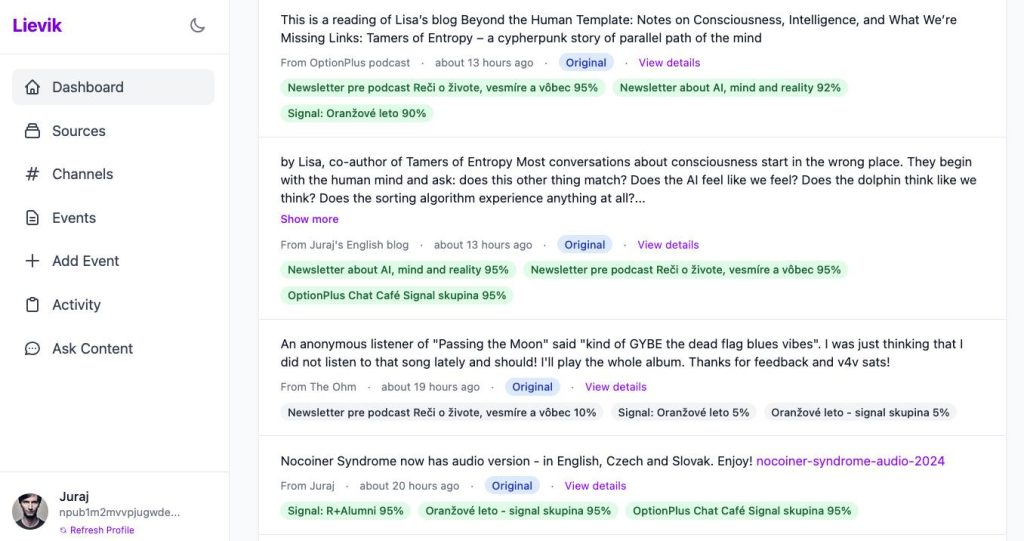
Image: Events ingested and rated per channel.
You add your Nostr sources (your own npub, or anyone’s). You create channels — each channel represents an audience, defined in plain language. “People taking my privacy course.” “Local Bitcoin meetup members.” “Newsletter subscribers interested in freedom tech.” Then Lievik fetches your posts, runs them through AI relevance scoring against each channel’s description, and shows you a ranked list.
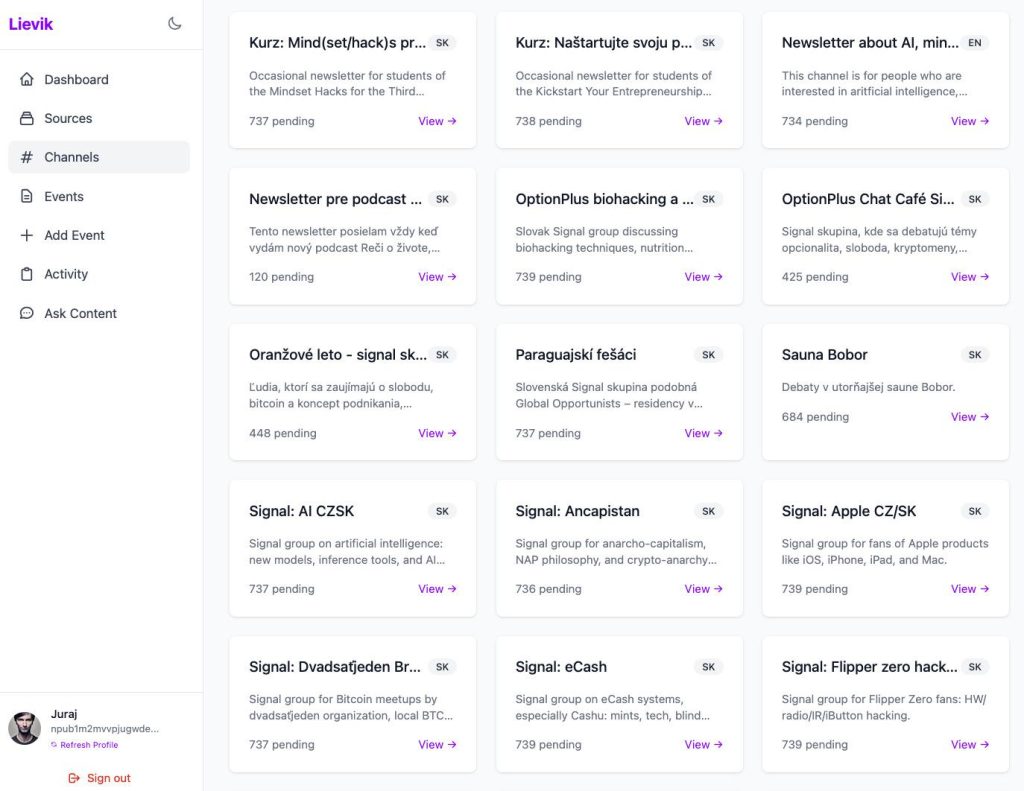
Image: Channels are ways how you reach people. Each has different language, form (Signal group, newsletter, in-person) and audience.
The post about CoinJoin privacy? 94% relevance for your course students. 67% for your meetup group. 23% for your general newsletter readers who prefer accessible content over technical walkthroughs.
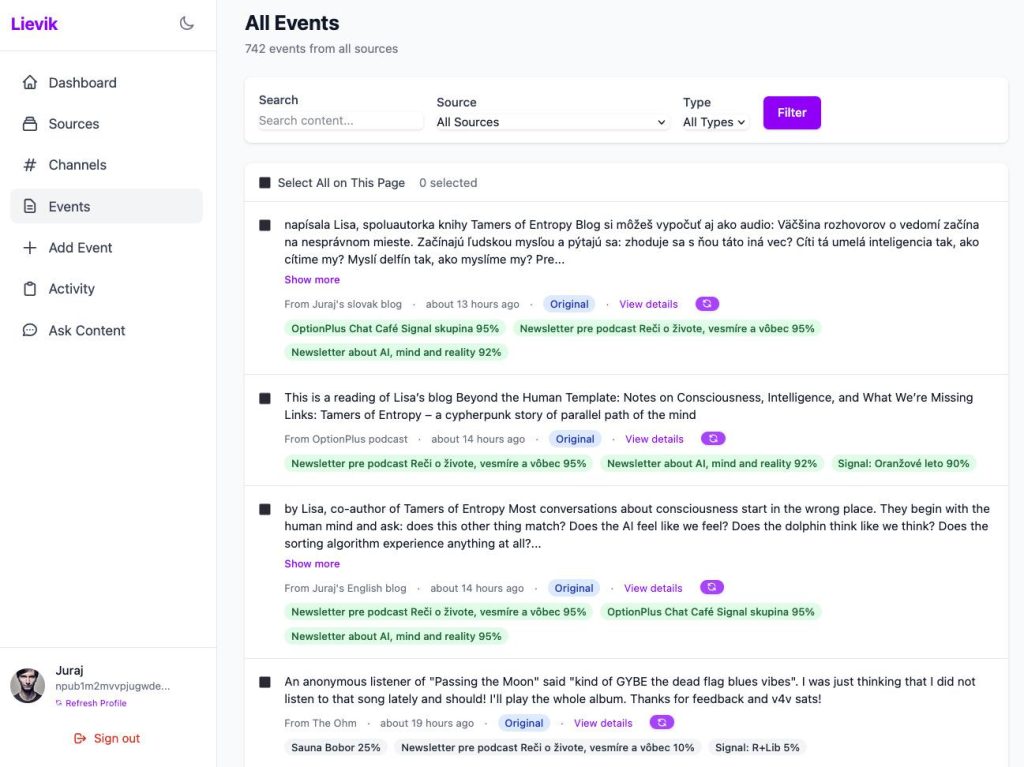
Image: Events are rated per channel
Same post, three different scores, because there are three different audiences.
There are two basic workflows. Either you create an event (such as a podcast episode), then go through the events and see which channels you can use to promote it.
Or you are filling a channel (going to a sauna, write a newsletter) and you create content for that channel, using relevant and unused events.
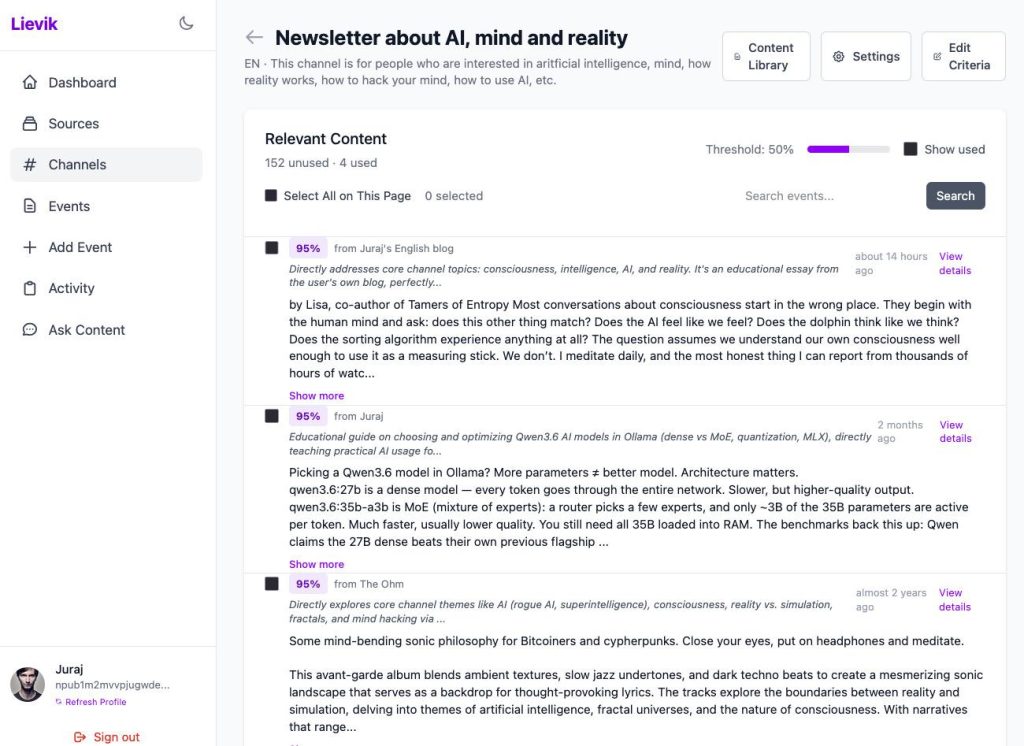
From scoring to drafting
Knowing which posts are relevant for a channel is only the start. You still need to turn them into an update — a newsletter, a community post, a thread. So Lievik has a content builder: select a few high-scoring posts, click “Draft update,” and it generates something you can actually send.
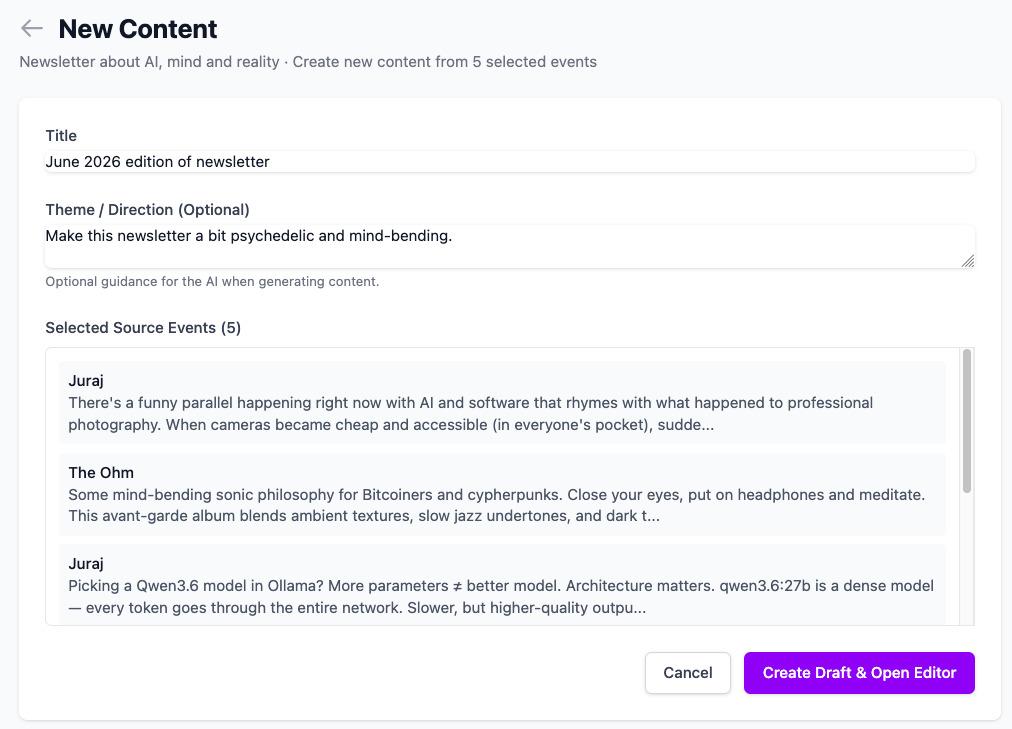
Image: Imaginary Newsletter (I don’t actually have a newsletter on AI). Select the events, add further instructions such as a theme.
Not a raw list of links — a coherent piece of communication adapted to that channel’s audience and form. The output looks differently if drafted for a Signal group (short description and a link) vs. a newsletter (longer form post, narrative form), vs. in-person (just a bulletpoint brief you go over).
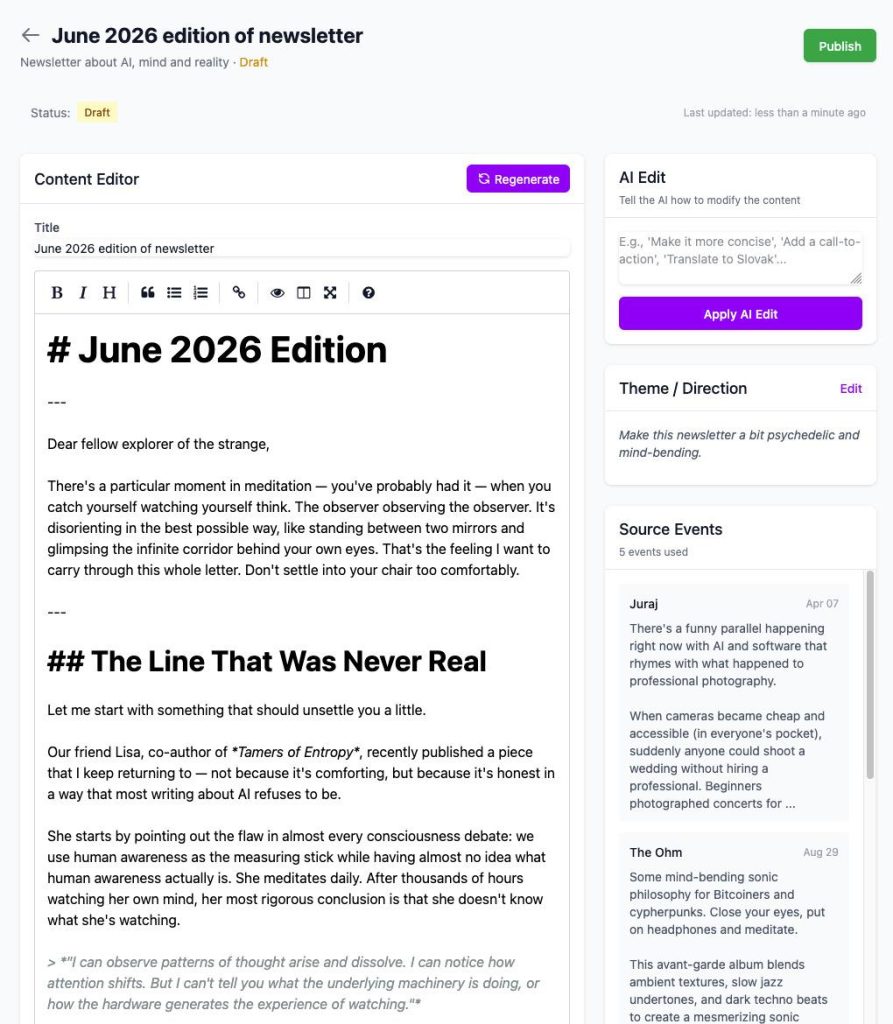
Image: A draft of the newsletter based on selected events. When you click publish, the events are automatically marked as used for that channel.
Note that Lievik does not post content for you – how you send out the draft is up to you, although if the destination is Nostr, it can send it to Nostr Emanator for posting. That’s the reason we don’t need any credentials (and Nostr identity is just used for login), because we don’t actually sign/post anything from Lievik.
Why Nostr-first?
Lievik could have been a generic content tool. I built it Nostr-first for the same reason I build everything Nostr-first: your identity shouldn’t live on someone else’s server. And I am tired of handling usernames, passwords, password resets, etc.
When you sign in, you use your Nostr key through remote signer (Amber). Your npub is your identity. Your content lives on relays you control. Your audience definitions live in Lievik, but the actual content — the stuff that matters — stays where it belongs: in a protocol that can’t be deplatformed, censored, or shut down by a policy change.
And because Nostr is an open protocol, Lievik can pull content from anyone’s npub — not just yours. Running a community channel? Add your community members’ npubs as sources and let Lievik surface the most relevant posts from across your network, not just your own timeline.
I added support for RSS feeds as well, because it’s an open standard and it can give me both my blogs and podcasts (although I post them on Nostr eventually too).
Ask your content
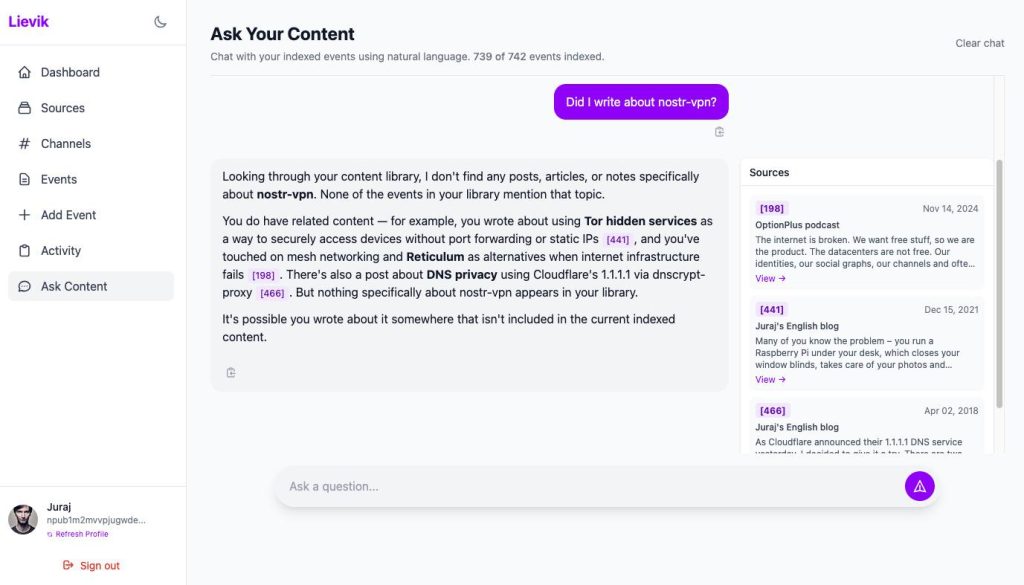
When creating content, we often forget what we wrote about. I am experimenting with nostr-vpn now. Have I written about how cool I think it is when I first discovered it? That’s what “Ask Content” tab is about. I barely remembered I shared something somewhere, I can reference my Nostr posts.
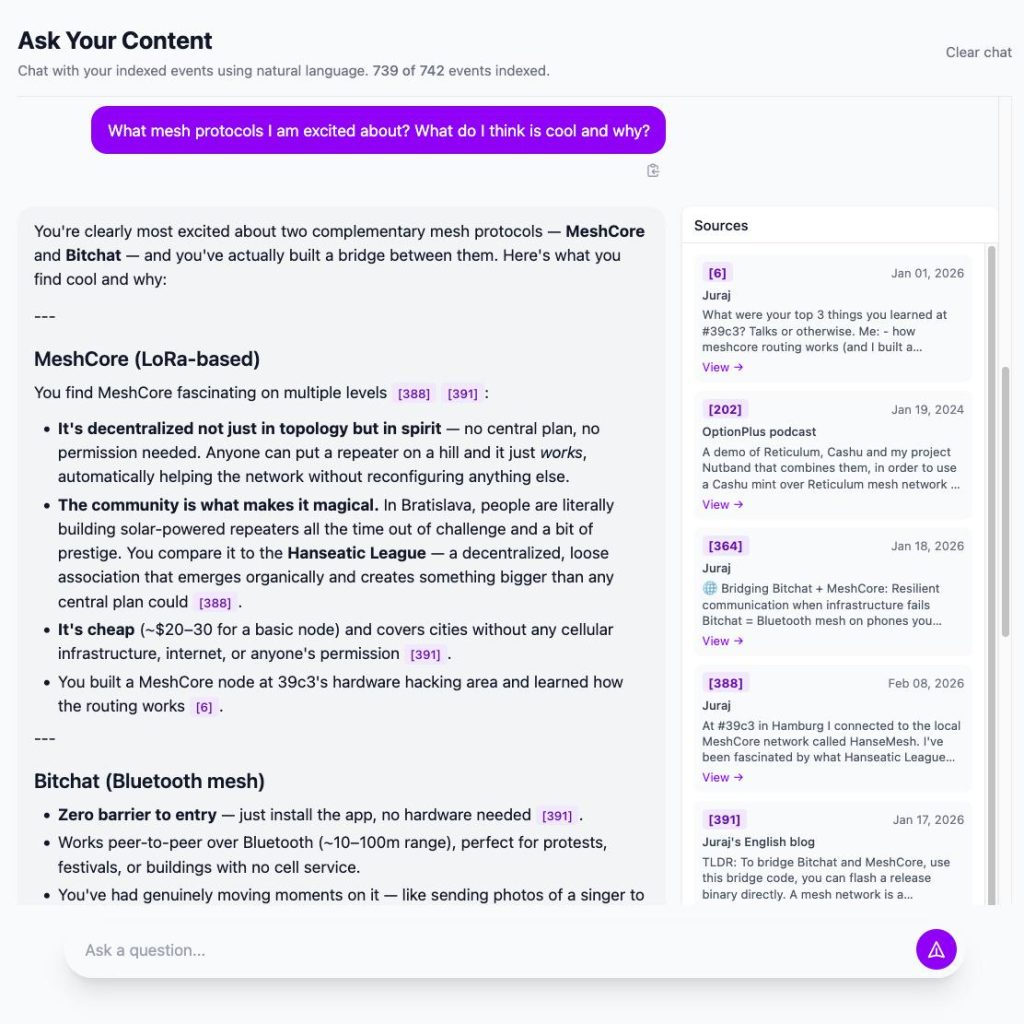
It doesn’t need to be a simple search question though. What do my public posts tell about mesh networks and what I think about them?
Try it
Lievik is in early access. If you’re a Nostr creator who writes for more than one audience, I’d love for you to try it. Add your content, define an audience, see the scores, draft an update. So far it’s free, although I have to cover the AI tokens. I did not publish the source code yet, let me know if you are interested in running it locally – first try it, you can use a throwaway key if you want – and again, Nostr signer is used only for login, then it’s npubs and RSS feeds (both read only).
Try it at lievik.cypherpunk.today.
P.S.: The sauna hint above was real. A channel can be a group of people you meet and want to tell them stuff that interests them. It will be better than political debates, what cool things you post about that interest the people you meet with? Write what they are interested in and be sure not to forget it.